
How Weather in Southern Utah Affects Your Garage Door Throughout the Year
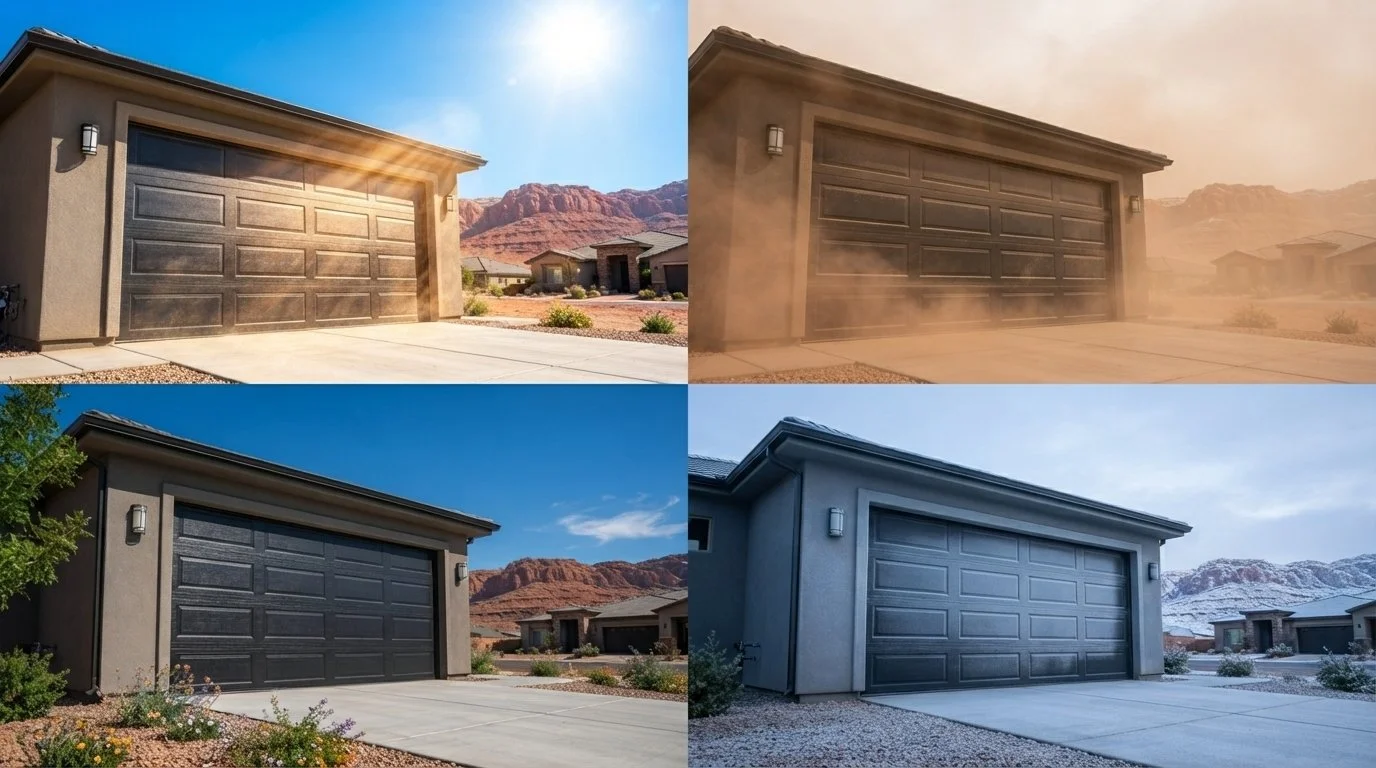
Introduction
Southern Utah is known for its dramatic climate shifts — extremely hot summers, cool winters, and dry desert air. While this weather is great for outdoor living, it can quietly damage one of the most used parts of your home: the garage door.
Many homeowners don’t realize that changing weather conditions directly affect how smoothly their garage door operates. Over time, these environmental factors can lead to noise, wear, and even complete system failure if not properly managed.
Understanding how weather impacts your garage door helps you prevent unexpected breakdowns and costly repairs while improving long-term performance and safety.
Trusted Local Garage Door Experts
Serving homeowners with reliable and affordable garage door solutions you can trust.
Understanding Garage Door Weather Damage in Southern Utah
The desert climate in Southern Utah creates unique challenges for homeowners. Constant temperature fluctuations, low humidity, and dust exposure all contribute to gradual deterioration of garage door systems.
Metal components expand during the day and contract at night, which slowly weakens structural alignment. Rubber seals dry out, lubrication breaks down faster, and electrical components face extra strain.
Over time, this leads to visible and functional issues such as sticking doors, unusual noises, and uneven movement. This is why homeowners often experience garage door weather damage without realizing the root cause is environmental exposure.
Extreme Heat Garage Door Problems in Summer
Summer in Southern Utah can be intense, with temperatures often rising high enough to affect mechanical systems. When a garage door is exposed to prolonged heat, metal parts expand, which creates friction between moving components.
This heat also causes lubricants to thin out or evaporate faster, reducing smooth operation. Springs and cables become more stressed, especially during frequent daily use.
In extreme cases, the opener motor also works harder than usual, increasing the risk of overheating or early failure. This is why many homeowners notice their garage doors becoming slower or noisier during peak summer months.
These issues highlight how extreme heat garage door conditions can significantly reduce system efficiency if not properly maintained.
Winter and Cold Weather Effects on Garage Doors
Although Southern Utah winters are not as harsh as northern regions, colder temperatures still impact garage door performance.
Metal contracts in cold weather, which can cause slight misalignment in tracks and hinges. This often leads to stiff movement or delayed response when opening or closing the door.
Lubricants also become thicker in low temperatures, making moving parts less responsive. In some cases, sensors may even become less sensitive due to moisture buildup or condensation.
All of these factors combined make seasonal awareness important for maintaining consistent performance throughout the year.
Garage Door Seasonal Maintenance Checklist
Each season brings different challenges, which means your garage door needs ongoing attention throughout the year.
In spring, it’s important to inspect for damage caused by winter contraction and check for loose hardware. Summer requires focus on heat protection and lubrication. Fall is ideal for preparing the system for cooler temperatures, while winter maintenance ensures smooth operation during cold mornings.
Regular inspections help identify small issues before they turn into expensive repairs. Adjusting tension, cleaning tracks, and testing safety features should all be part of a routine care plan.
Following proper garage door seasonal maintenance practices ensures long-term durability and reduces the risk of sudden breakdowns.
Why Garage Door Maintenance Tips Matter Year-Round
Many homeowners only think about garage door care when something goes wrong, but preventative maintenance is far more effective and cost-efficient.
Simple habits like lubricating moving parts, checking alignment, and tightening loose bolts can significantly extend the life of your system. These small actions also help reduce noise and improve overall performance.
Professional inspections are also recommended at least once a year to ensure everything is working safely and efficiently. Ignoring small issues can lead to major mechanical failures over time.
That’s why following consistent garage door maintenance tips is essential for protecting your investment and avoiding unexpected repair costs.
Do You Need an Insulated Garage Door in Southern Utah?
With extreme temperature variations, insulation becomes an important factor for many homeowners in the region.
An insulated garage door helps regulate internal temperature, reducing the impact of external heat and cold. This not only protects stored items but also improves energy efficiency in connected living spaces.
Insulated doors also tend to operate more quietly and smoothly, as the added layers reduce vibration and noise during movement.
For homes exposed to frequent weather changes, upgrading to an insulated garage door can be a smart long-term investment that improves comfort and durability.
St. George Garage Doors: Local Weather Challenges
Homes in St. George face some of the most intense weather conditions in Southern Utah. The combination of high heat, dust storms, and dry air creates continuous stress on garage door systems.
Dust can easily accumulate in tracks and rollers, causing friction and reducing smooth operation. Heat exposure weakens seals and hardware, while dry air accelerates material aging.
These conditions require more frequent inspections and care compared to milder climates. Choosing durable materials and weather-resistant components is especially important for long-term performance in the area.
This is why St. George garage doors often require more proactive maintenance compared to other regions.
When Weather Damage Turns Into Garage Door Repair
Even with proper maintenance, weather-related wear will eventually lead to mechanical issues. Warning signs include unusual noises, uneven movement, slow response times, and visible wear on components.
If the door starts sticking, shaking, or making grinding sounds, it’s likely that internal parts are already affected by long-term exposure.
At this stage, professional repair becomes necessary to restore safe and reliable operation. Delaying repairs can increase damage and lead to complete system failure.
Addressing issues early helps avoid more expensive fixes and ensures your garage door continues working efficiently.
How to Protect Your Garage Door from Weather Damage
Preventing damage is always better than repairing it. Homeowners can take several steps to protect their garage door from environmental stress.
Applying weather-resistant lubricants, cleaning tracks regularly, and inspecting seals are simple but effective measures. Installing protective coatings or upgrading older components can also improve durability.
Most importantly, scheduling professional inspections ensures that hidden issues are detected early.
With the right care routine, you can significantly reduce the impact of weather changes and extend the life of your garage door system.
Need Fast Garage Door Help?
Conclusion
Weather plays a much bigger role in garage door performance than most homeowners realize. From intense summer heat to cooler winter conditions, every season in Southern Utah contributes to gradual wear and tear.
By understanding these effects and following a consistent maintenance routine, you can significantly reduce the risk of breakdowns and extend the life of your system.
In the end, staying proactive with inspections and care is the best way to protect your home from unexpected garage door problems.
Frequently Asked Questions (FAQs)
Can extreme heat damage a garage door permanently?
Yes, long-term exposure to heat can weaken metal components, reduce lubrication effectiveness, and affect motor performance.
How often should I do garage door maintenance?
At least twice a year, with seasonal checks recommended for best performance.
What is the best garage door for hot climates?
Insulated and weather-resistant doors are generally best suited for hot and dry environments.
Does insulation really reduce weather damage?
Yes, insulation helps regulate temperature changes and reduces stress on moving parts.
When should I call for garage door repair?
You should call a professional when you notice grinding noises, uneven movement, or slow operation.
