
7 Garage Door Noises You Should Never Ignore (And What They Mean)
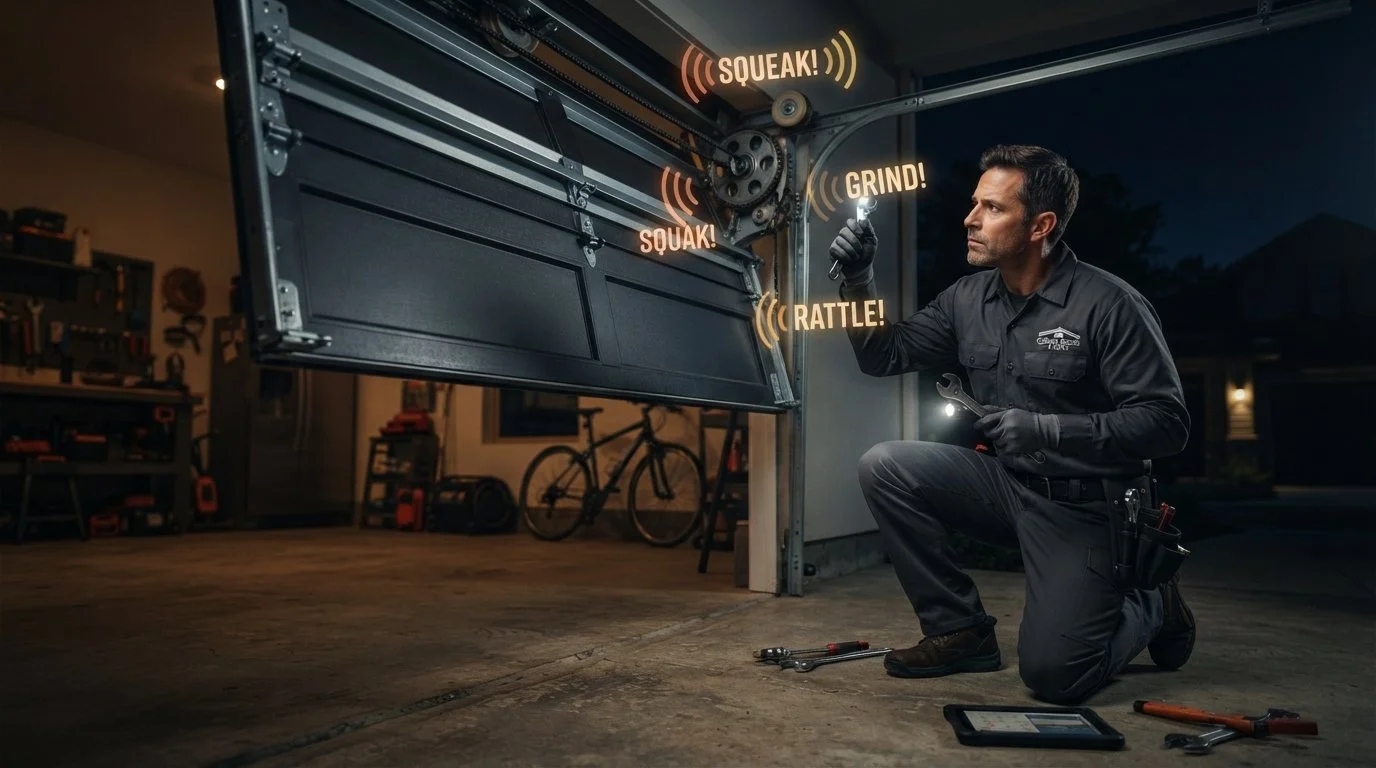
Introduction
If your garage door makes noise every time you open or close it, it’s not something to ignore. A garage door is one of the largest moving systems in your home, and unusual sounds are often the first warning sign that something is wearing out, loosening, or about to fail.
Many homeowners dismiss a noisy garage door as normal wear and tear. However, sounds like squeaking, grinding, or rattling usually indicate underlying mechanical issues that can turn into expensive repairs if left unchecked.
In this guide, we’ll break down the 7 most common garage door noises, what they mean, and when you should consider professional help or garage door maintenance before the problem gets worse.
Explore Our Garage Door Solutions
Why Is Your Garage Door Making Noise?
A garage door operates using multiple moving parts — springs, rollers, tracks, hinges, cables, and an opener motor. Over time, these components experience friction, dust buildup, and metal fatigue.
Here are the most common reasons behind a noisy garage door:
Lack of lubrication on moving parts
Loose bolts or hardware
Worn-out rollers or hinges
Misaligned tracks
Aging garage door opener
Broken or strained springs
While some sounds are harmless, others are early warning signs of serious mechanical failure. That’s why identifying the type of noise is important before it leads to a full breakdown and costly garage door repair.
1. Squeaking Noise – Dry Rollers or Hinges?
(garage door squeaking)
A high-pitched squeaking sound is one of the most common garage door complaints. If your door sounds like it’s “crying” every time it moves, it usually points to friction between metal parts.
What causes squeaking?
Dry rollers and hinges
Lack of lubrication
Dust and dirt buildup
Old or worn metal components
Can lubrication fix it?
In many cases, yes. A proper garage door maintenance routine includes lubricating rollers, hinges, and springs with a silicone-based spray. This reduces friction and eliminates minor squeaks.
When should you worry?
If squeaking continues even after lubrication, it may indicate worn rollers or hinge damage — both of which require professional inspection.
2. Grinding Noise – A Warning You Shouldn’t Ignore
(garage door grinding noise)
A grinding sound is much more serious than squeaking. If your garage door sounds like metal scraping against metal, stop using it immediately.
Possible causes:
Damaged rollers or bearings
Misaligned tracks
Worn-out motor gears in the opener
Lack of proper lubrication over time
Why it’s dangerous
A grinding noisy garage door is often a sign that components are actively damaging each other. Continuing to operate the door can lead to complete system failure.
Recommended action
This is not a DIY situation. You should schedule professional garage door repair as soon as possible to avoid further damage or safety risks.
3. Rattling Noise – Loose Hardware Could Be the Culprit
(garage door rattling)
If your garage door sounds like it’s shaking or vibrating loudly during movement, you’re likely dealing with a rattling issue.
Why garage doors rattle:
Loose nuts and bolts
Worn track brackets
Unbalanced door sections
Old or weak rollers
What you can check:
You can visually inspect brackets and screws to see if anything is visibly loose. However, tightening without proper knowledge can sometimes make the issue worse if alignment is involved.
Professional insight:
Rattling is often a sign your door needs full garage door maintenance, not just quick tightening. A technician will check alignment, balance, and hardware stability.
4. Banging or Popping Sounds – Spring Tension Issues
Sudden loud banging or popping noises usually come from the torsion springs or extension springs.
What it could mean:
Spring tension imbalance
Partially broken springs
Sudden release of stored tension
Misaligned cable system
Why it matters:
Garage door springs are under extreme pressure. If they fail completely, the door can become very heavy and dangerous to operate.
Important note:
Never attempt to fix springs yourself. This is one of the most dangerous garage door components and always requires professional garage door repair service.
5. Scraping or Screeching Noise – Track or Roller Damage
A scraping or screeching sound is hard to ignore. It often feels like something is “dragging” every time the door moves.
What causes scraping noise?
Bent or misaligned tracks
Worn-out metal rollers
Dirt or debris inside the track
Lack of lubrication on moving parts
Why this happens
When rollers don’t move smoothly inside the track, they start scraping against metal surfaces. Over time, this creates deeper damage and increases friction, making your noisy garage door worse with every use.
What you should do
Light cleaning and lubrication may help in early stages, but if the track is bent or rollers are worn out, you’ll likely need professional garage door repair to prevent further structural damage.
6. Clicking or Buzzing from the Garage Door Opener
If the noise is coming from the motor instead of the door itself, the issue may be electrical or mechanical inside the opener system.
Common causes:
Faulty garage door opener motor
Worn-out gears inside the unit
Sensor misalignment
Remote control or wiring issues
What it means
A clicking or buzzing sound often indicates the opener is trying to function but failing to engage the system properly. This is a common sign of an aging opener or electrical malfunction.
Quick checks you can do:
Replace remote batteries
Check if sensors are aligned
Ensure nothing is blocking the track
If the noise continues, it’s time for professional diagnosis and possible replacement during garage door maintenance or repair service.
7. Loud Vibrations During Operation – Loose or Aging System
If your garage door shakes violently or vibrates loudly while moving, it’s a sign that multiple components are not working together smoothly.
Possible reasons:
Loose mounting brackets
Worn rollers or hinges
Imbalanced garage door sections
Weak or aging opener motor
Why it’s a problem
Excess vibration puts stress on the entire system. Over time, it can damage tracks, loosen hardware further, and increase the risk of sudden failure.
Recommended solution
A full garage door maintenance service is usually required here. A technician will rebalance the door, tighten hardware, and inspect all moving parts to restore smooth operation.
Can You Fix a Noisy Garage Door Yourself?
Some minor issues can be handled by homeowners, but not all.
Safe DIY maintenance tasks:
Lubricating rollers, hinges, and springs
Tightening visible loose bolts
Cleaning tracks from dirt and debris
What you should NOT do:
Adjust or replace springs
Fix track alignment without experience
Open or repair the garage door opener motor
Improper handling can make a noisy garage door worse or even create safety risks. When in doubt, always call a professional.
How Regular Garage Door Maintenance Prevents Costly Repairs
Routine garage door maintenance is the easiest way to avoid most of the noises discussed above.
Key maintenance steps:
Lubricate moving parts every 3–6 months
Inspect rollers and hinges for wear
Check door balance regularly
Tighten hardware and brackets
Test opener safety features
Preventive maintenance not only reduces noise but also extends the lifespan of your entire system and reduces the need for emergency garage door repair.
When Should You Schedule Professional Garage Door Repair?
You should contact a professional immediately if you notice:
Grinding or scraping noises getting worse
Door shaking or moving unevenly
Springs making loud popping sounds
Door struggling to open or close
Noise continues after basic maintenance
Ignoring these signs can turn a small issue into a full system failure. Professional repair ensures safety, accuracy, and long-term performance.
Get Expert Help for a Noisy Garage Door
Conclusion
A garage door making noise is never just a minor annoyance—it’s a warning signal. Whether it’s squeaking, grinding, rattling, or vibration, each sound tells you something important about the health of your system.
By paying attention early and investing in regular garage door maintenance, you can avoid expensive breakdowns and extend the life of your door. However, when noises persist or worsen, professional garage door repair is the safest and most reliable solution.
If your garage door is showing any of these warning signs, it’s always better to fix the issue early—before it turns into a costly emergency.
Frequently Asked Questions
Why is my garage door making noise when opening?
It usually happens due to friction, worn rollers, or lack of lubrication in moving parts.
Is a squeaky garage door dangerous?
Not immediately, but it can become serious if ignored. It often signals lack of maintenance.
What causes a garage door grinding noise?
Grinding usually comes from damaged rollers, misaligned tracks, or opener gear issues.
Can I lubricate my garage door myself?
Yes. Light lubrication is part of basic garage door maintenance and is recommended every few months.
How often should garage door maintenance be done?
At least once or twice a year for best performance and to avoid a noisy garage door.
