
Signs Your Garage Door Spring Is About to Fail (And What to Do About It)
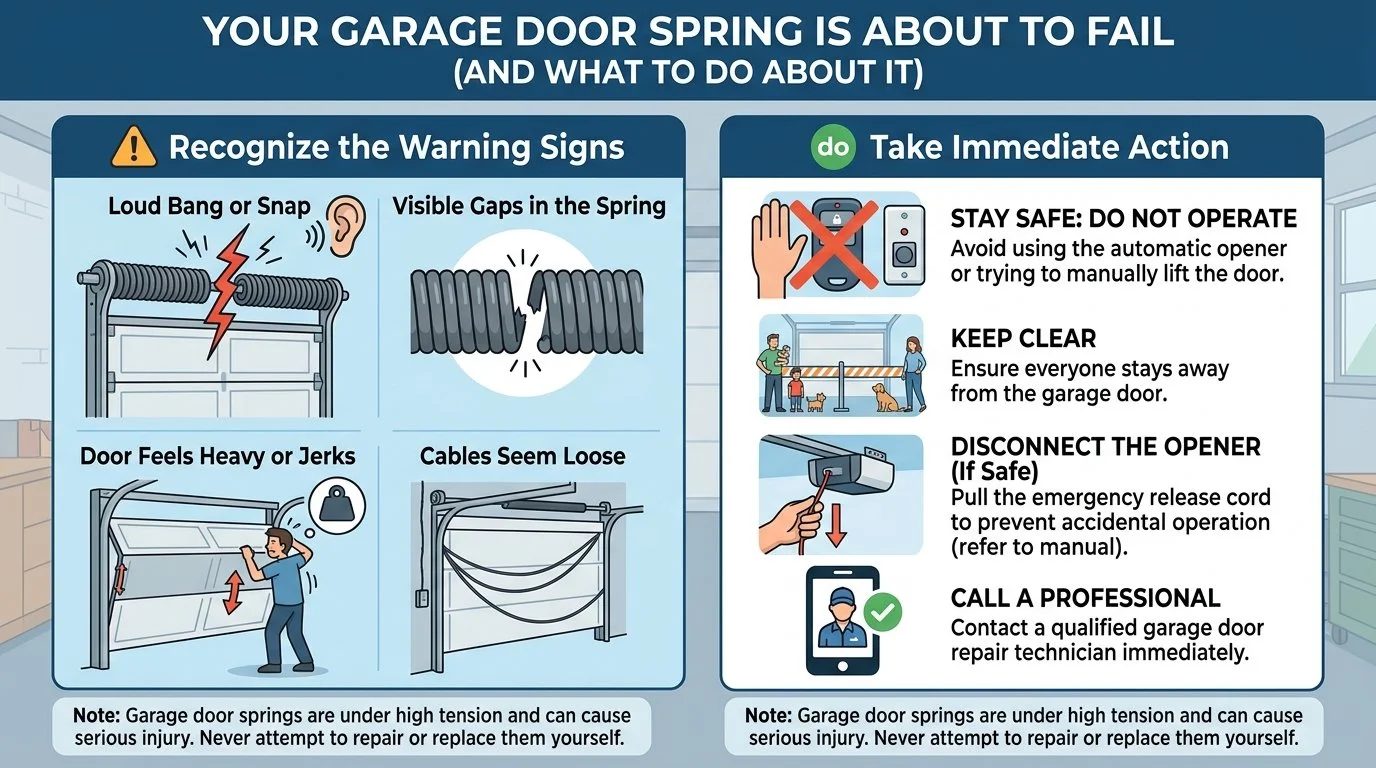
A garage door spring rarely fails without warning. Most of the time, there are small signs building up in the weeks or even months before a spring finally snaps, and catching those signs early can mean the difference between a routine repair and an unexpected emergency that leaves your door stuck open or closed. As a garage door company serving St. George, Hurricane, and all of Southern Utah, Advanced Garage Door Works sees this pattern play out constantly, and we want homeowners and business owners to know exactly what to watch for.
Why Garage Door Springs Matter So Much
Garage door springs do the heavy lifting, literally. Whether your system uses torsion springs mounted above the door or extension springs running along the tracks, these components counterbalance the weight of the door so it can open and close smoothly with relatively little force from the opener motor. A door that weighs anywhere from 150 to over 400 pounds depending on size and material relies almost entirely on properly functioning springs to move safely.
When a spring weakens or fails, that balance disappears. The opener has to work much harder, the door can become difficult or impossible to lift manually, and in more serious cases the door can slam down unexpectedly, creating a real safety hazard for anyone nearby.
Common Signs of a Failing Spring
One of the earliest signs is a door that feels heavier than usual when opened manually, particularly if you disconnect the opener and try lifting it by hand. A properly balanced door should lift with relatively little resistance and stay in place partway up. If it feels like dead weight or drops back down on its own, that is a strong indicator the spring has lost tension.
Visible gaps in the coils of a torsion spring, or a spring that looks stretched, bent, or separated, are also clear warning signs. A loud bang coming from the garage, often described as sounding like a gunshot, is frequently the sound of a spring actually breaking, and if you hear this, the door should not be operated again until it has been inspected.
Other symptoms include a door that opens unevenly, jerks or shudders during movement, or an opener that strains and makes louder noises than normal while trying to lift the door. These are all signs that the spring is no longer doing its job effectively, even if it has not fully failed yet.
Torsion Springs vs. Extension Springs
Most residential garage doors in Southern Utah use one of two spring systems. Torsion springs are mounted horizontally above the closed door and twist to store energy, offering a smoother, more controlled lift and generally a longer lifespan. Extension springs run along the horizontal tracks on either side of the door and stretch to create tension as the door closes.
Torsion springs are generally considered the safer and more durable option, particularly when paired with safety cables, but both systems can fail if they are worn, improperly sized for the door's weight, or simply reaching the end of their expected lifespan. Understanding which system your door uses helps a technician diagnose problems faster and recommend the right replacement.
How Long Do Garage Door Springs Actually Last?
Most garage door springs are rated for a certain number of open-close cycles, often somewhere between 10,000 and 15,000 cycles for standard residential springs, with higher-cycle options available for doors that get used more frequently. For an average household opening the garage door a few times a day, that typically translates to somewhere in the range of seven to twelve years before a spring reaches the end of its expected life, though usage patterns, door weight, and climate all affect that timeline.
Homes and businesses that use their garage door more frequently, such as a family with multiple drivers or a commercial property with heavy daily use, will naturally see springs wear out faster and should plan for more frequent inspections.
Why a Broken Spring Is a Safety Issue, Not Just an Inconvenience
It can be tempting to view a garage door spring as a minor mechanical part, but a broken or failing spring creates real safety risks. A door that is no longer properly counterbalanced can fall unexpectedly, and the springs themselves store a significant amount of tension that can cause injury if handled incorrectly. This is one of the main reasons spring repair and replacement should always be handled by a trained technician rather than attempted as a do-it-yourself project.
If your garage door isn't functioning properly, it's more than just an inconvenience. It can pose a genuine safety hazard for anyone entering or exiting the garage, particularly homes with children or pets who may be near the door when it moves.
What to Do If You Notice Warning Signs
If you notice any of the signs described above, the safest first step is to stop using the garage door opener and, if possible, avoid manually operating the door until it has been inspected. Continuing to use a door with a compromised spring increases the risk of a sudden, more dangerous failure and can also put additional strain on the opener motor, leading to more expensive repairs down the line.
From there, a qualified technician can inspect the spring system, diagnose whether the issue is wear, improper sizing, or a full break, and recommend the right repair or replacement. Balanced pricing and clear repair recommendations should always come before any work begins, so you understand exactly what is being fixed and why.
Trust Advanced Garage Door Works With Your Spring Repair
Advanced Garage Door Works is a locally owned, family operated garage door company serving St. George, Hurricane, and all of Southern Utah. With over a decade of combined experience, we specialize exclusively in garage doors, which means our technicians have seen nearly every version of spring failure and know how to diagnose the problem quickly and fix it correctly the first time.
If your garage door feels heavier than usual, sounds different when operating, or you have noticed any of the warning signs above, don't wait for a full failure. Call Advanced Garage Door Works today to schedule an inspection and keep your garage door operating safely.
Frequently Asked Questions
How do I know if my garage door spring is broken?
Common signs include a door that feels unusually heavy when lifted manually, visible gaps or separation in the spring coils, a loud bang from the garage, and a door that opens unevenly or struggles to move at all.
Is it dangerous to use my garage door with a broken spring?
Yes. A broken spring means the door is no longer properly counterbalanced, which can cause it to fall unexpectedly and creates a real safety risk, especially around children and pets.
What is the difference between torsion springs and extension springs?
Torsion springs are mounted above the door and twist to store energy, generally offering a smoother lift and longer lifespan. Extension springs run along the side tracks and stretch to create tension. Both can fail with wear or age.
How long do garage door springs typically last?
Most residential springs are rated for a certain number of cycles, often translating to roughly seven to twelve years of typical household use, though frequency of use and door weight affect the exact timeline.
Can I replace a garage door spring myself?
It is not recommended. Garage door springs store significant tension and can cause serious injury if handled incorrectly. Spring repair and replacement should always be handled by a trained technician.
What should I do if I hear a loud bang from my garage door?
A loud bang is often the sound of a spring breaking. Stop using the door immediately and contact a garage door professional for an inspection before attempting to operate it again.
